

Restoring the Poyat Stream in Violay, France
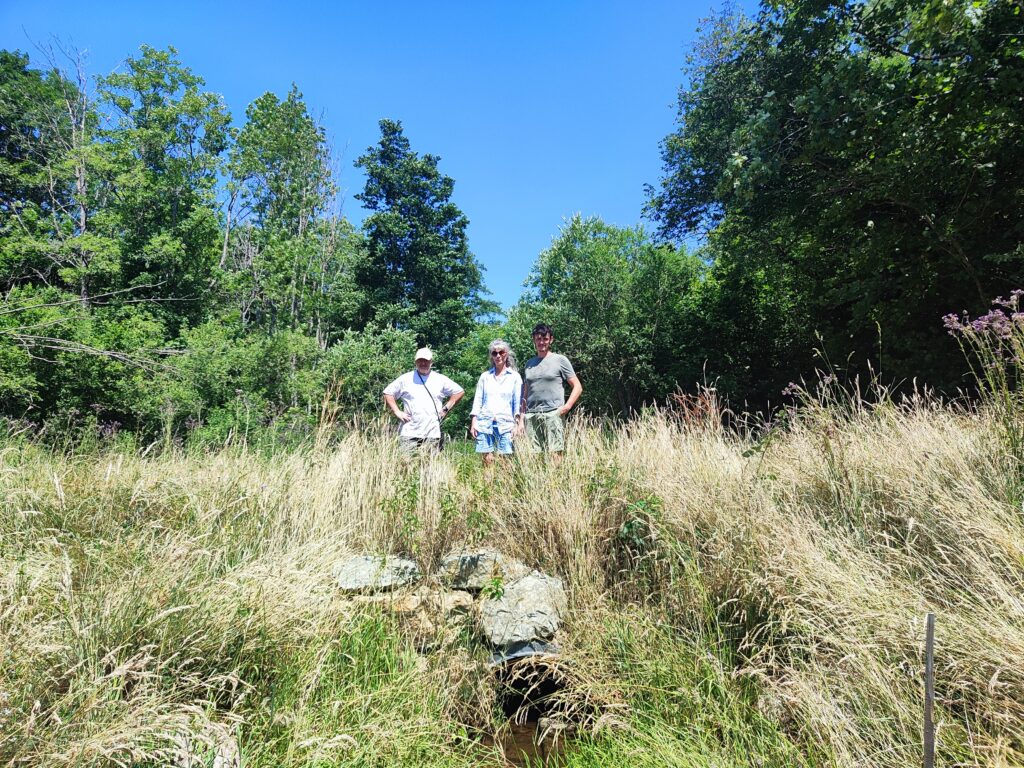
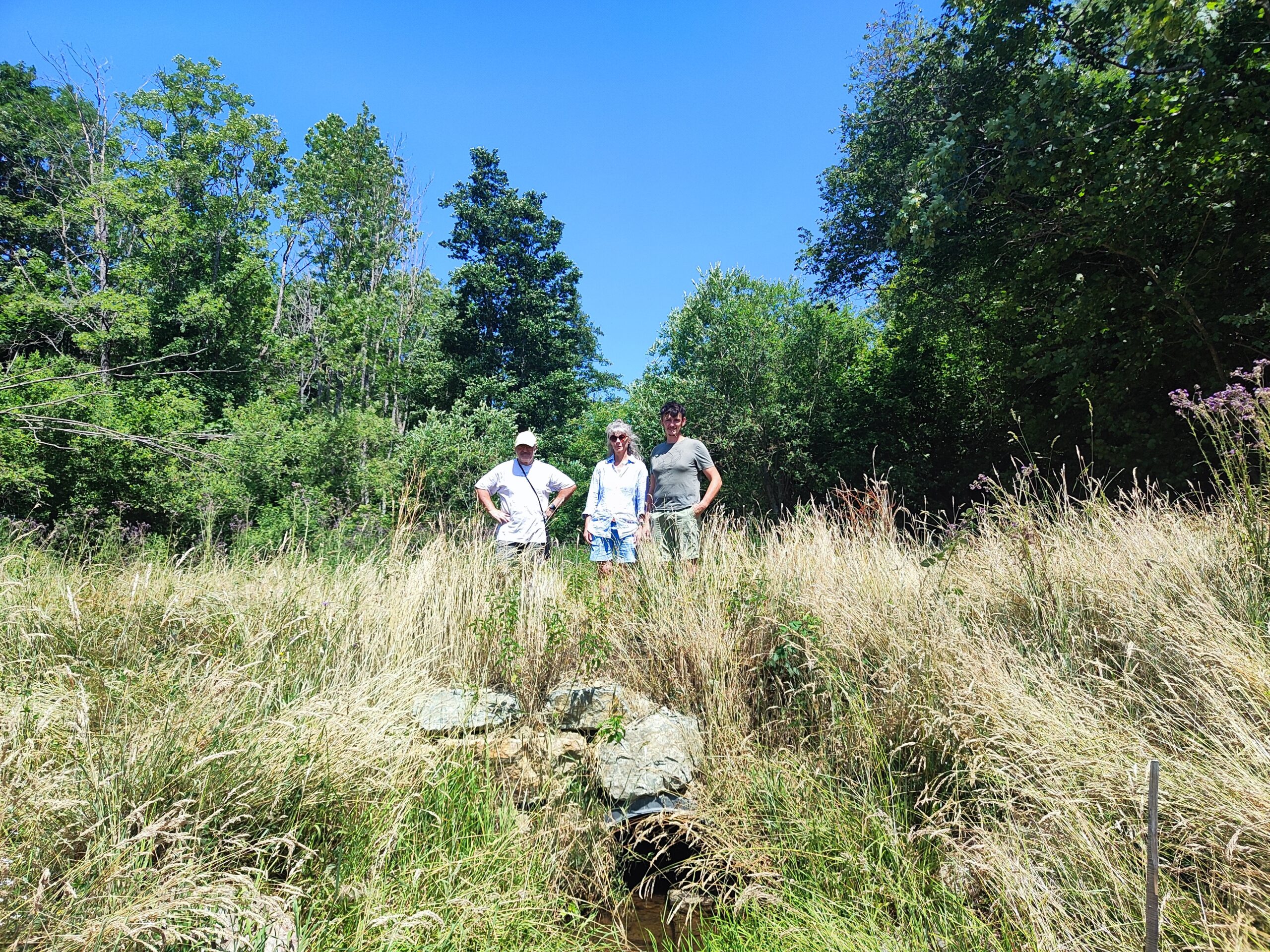
Last week, the BRF team travelled west of Lyon to visit the restored culvert bridge “Chez Nouailly” on the Poyat Stream in Violay, as part of our Open Rivers Programme-funded project assessing the ecological and social outcomes of small barrier removals across Europe. The visit forms part of our ongoing monitoring of barrier removal sites, including this former perched culvert, to understand how river systems recover following different types of restoration interventions.
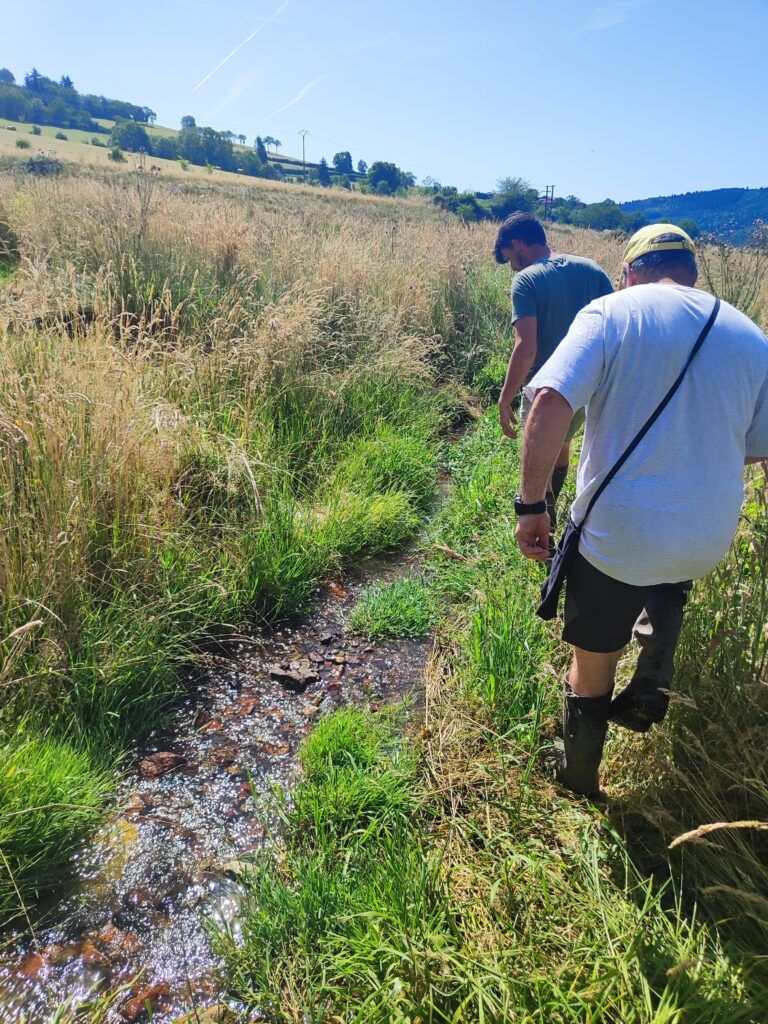
This project, led by SISMAE (Solutions for an Integrated and Sustainable Management of Aquatic Environments), with support from the European Rivers Network and the Open Rivers Programme, restored approximately 2 km of river connectivity in 2024. The intervention went beyond simple barrier removal: the stream was reconnected to its original valley-bottom course, a natural channel was recreated, sediments from the former culvert were reused to rebuild the riverbed, and riparian vegetation was established to support long-term habitat development
Restoration approach: beyond barrier removal
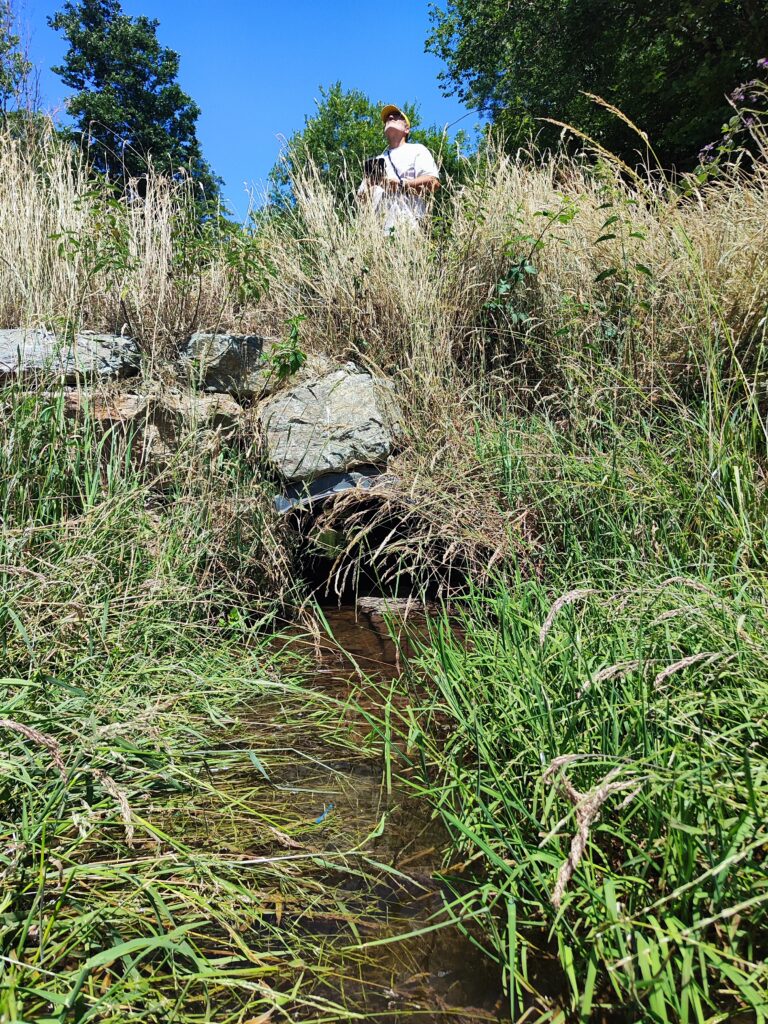
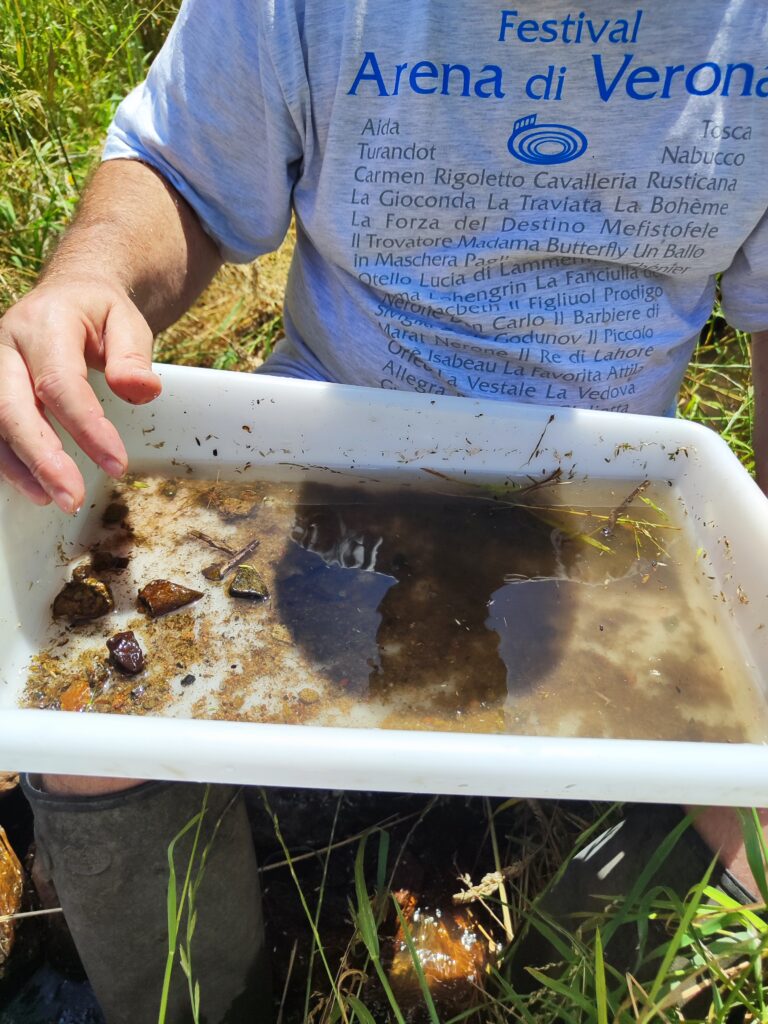
During our field visit, we assessed a range of ecological and hydromorphological indicators to evaluate the recovery process. The site already shows clear signs of improvement: the stream is flowing through its natural course again, channel morphology is actively developing, and riparian vegetation is establishing, contributing to habitat quality and future shading.
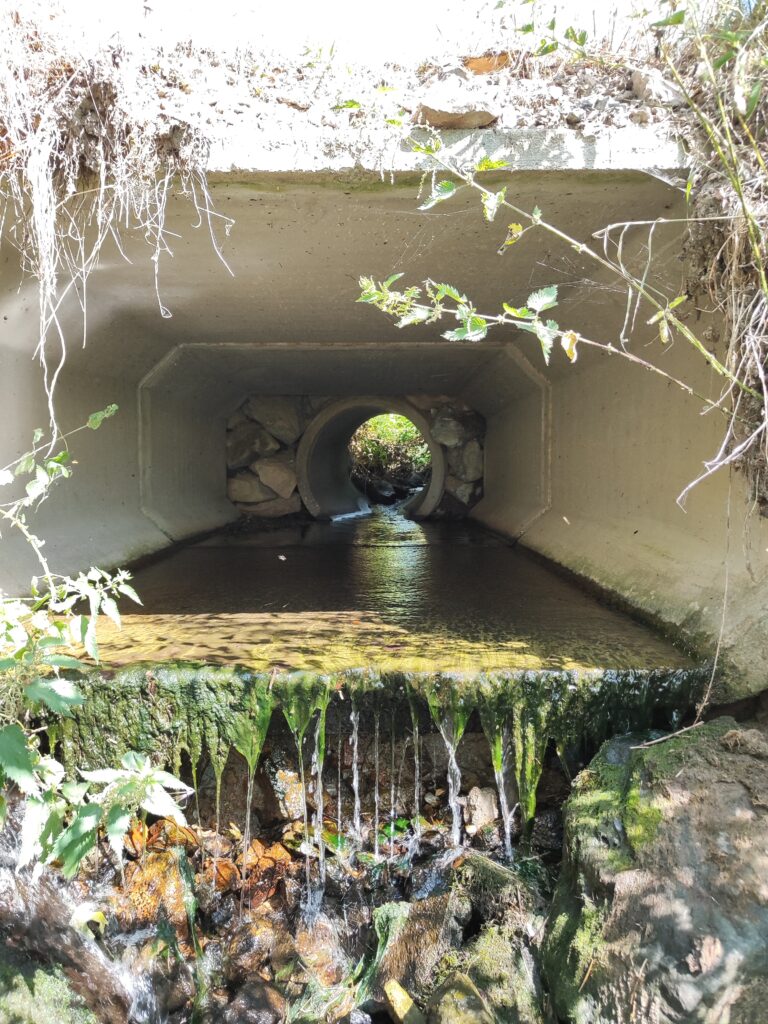
The project also included replacing the base of an upstream culvert with an open natural streambed, eliminating the previous perched drop and allowing aquatic organisms to move freely through the structure.
Ecological relevance
The ecological potential of the site is high. Target species include the endangered white-clawed crayfish (Austropotamobius pallipes), brown trout, and other native aquatic fauna. Recent fish surveys carried out by Pêche 42 confirmed healthy trout populations in the surrounding reaches.
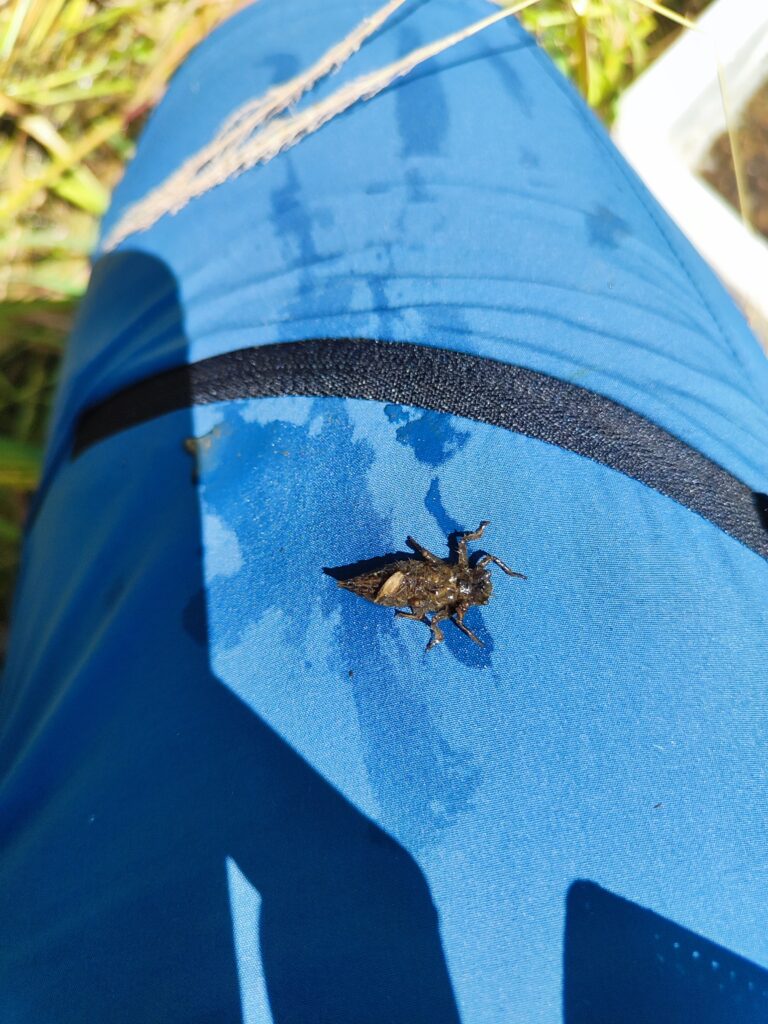
During our visit, we also observed indicators of ecological recovery, including abundant damselflies (both adults and larvae) and evidence of otter activity along the stream, highlighting the growing quality of the habitat.
Stakeholder engagement and project implementation
Alongside ecological monitoring, we are also assessing the social dimension of barrier removal. During the visit, we shared our public perception survey through the Violay Town Hall and engaged with local residents about the project. As the restoration takes place on private farmland, many people in the village were not previously aware of the intervention, making communication and outreach an important component of the work.
A second culvert further upstream is also planned for replacement, with full support from the landowner, who is actively engaged in continuing restoration efforts.
This project illustrates that river restoration is not only about removing barriers but about restoring processes, rebuilding habitat, and working with local stakeholders. By combining ecological and social monitoring, we can better understand what drives successful river recovery and apply these lessons to barrier removal projects across Europe.