


Monitoring the ecological impacts of culvert removals in the Rulles–Anlier catchment, Wallonia, Belgium
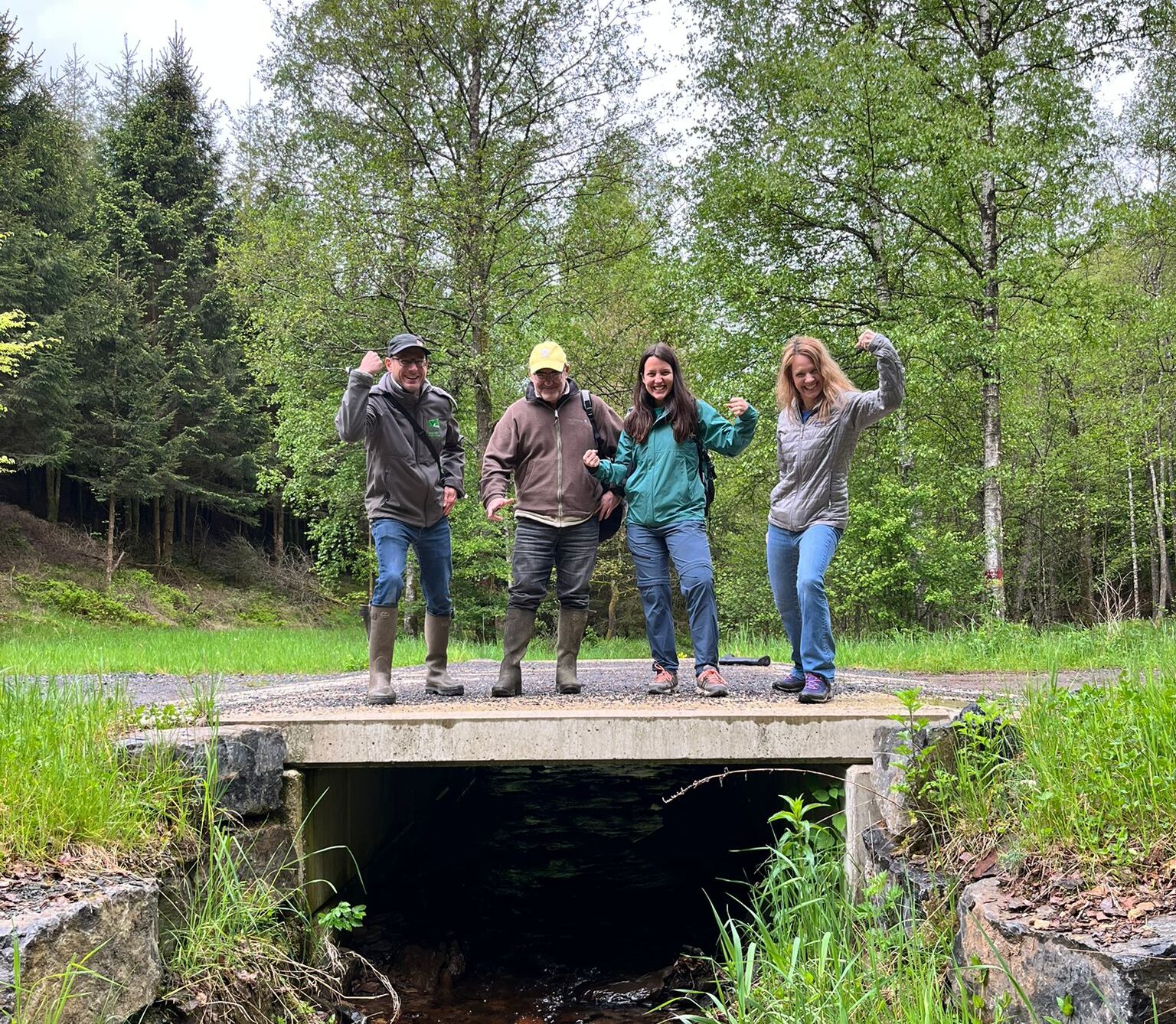
Last week, the BRF team travelled to southern Belgium to assess a culvert replacement project in the Forêt d’Anlier, close to the Luxembourg border. The visit formed part of the Open Rivers Programme (ORP) project, within which BRF is assessing the ecological impacts of small barrier removals.
The Forêt d’Anlier is one of the largest continuous forest areas in Belgium, covering around 7,000 hectares of deciduous woodland across the communes of Habay, Léglise, Fauvillers, and Martelange. The forest is fully included in the Natura 2000 network and is recognised for its high ecological value and relatively intact forest river systems.
River systems and restoration approach
The project focuses on tributaries of the Rulles and Anlier river systems.A broader assessment in the forest identified more than 40 barriers to ecological continuity, with 14 prioritised due to their strong fragmentation effects. Across the intervention area:
- 11 culverts have already been removed + 3 coming
- Old structures were dismantled and replaced using a modular “lego-type” technique with prefabricated concrete elements
- The new structures maintain a natural riverbed while allowing forestry access
- Around 28 km of river connectivity have been restored
Ecological relevance
The culverts were particularly critical for the freshwater pearl mussel (Margaritifera margaritifera), an Endangered species globally and Critically Endangered in the EU. Over 90% of Belgium’s remaining populations occur in streams within the Forêt d’Anlier, where the species depends on healthy trout populations for its larval development.
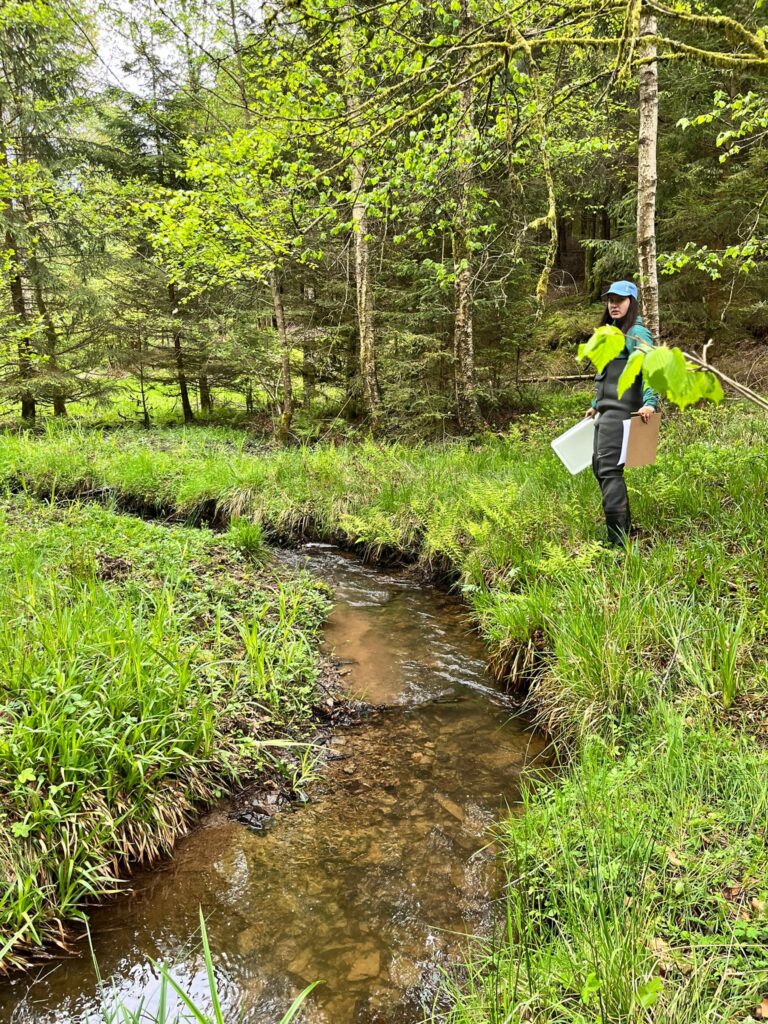
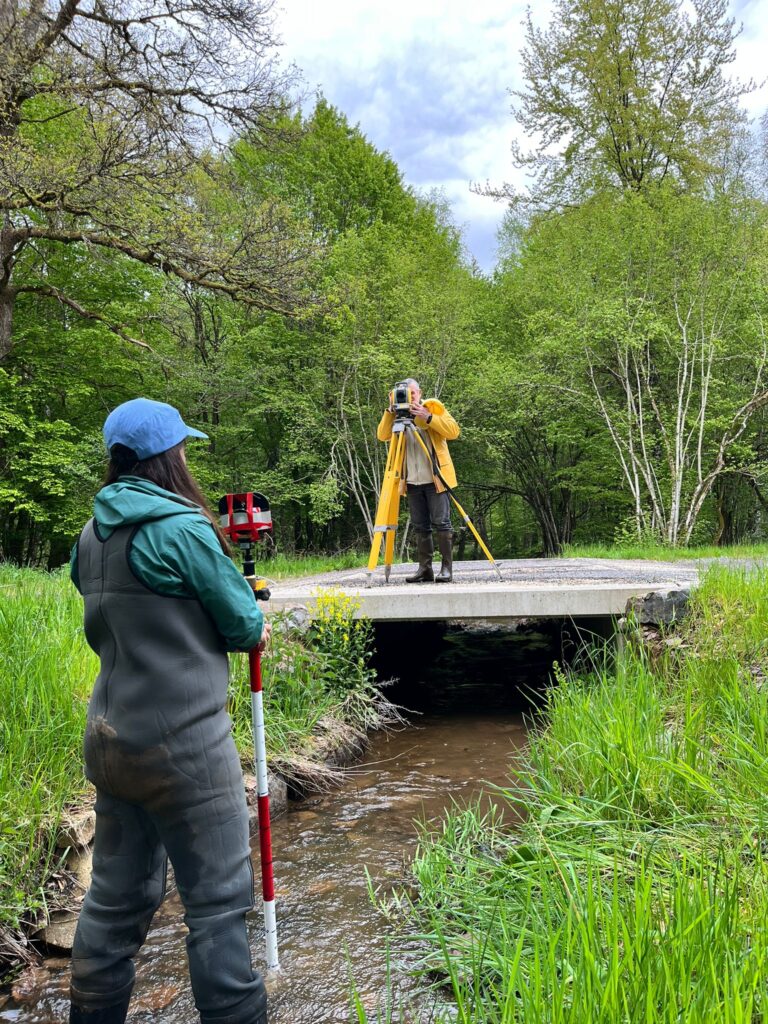
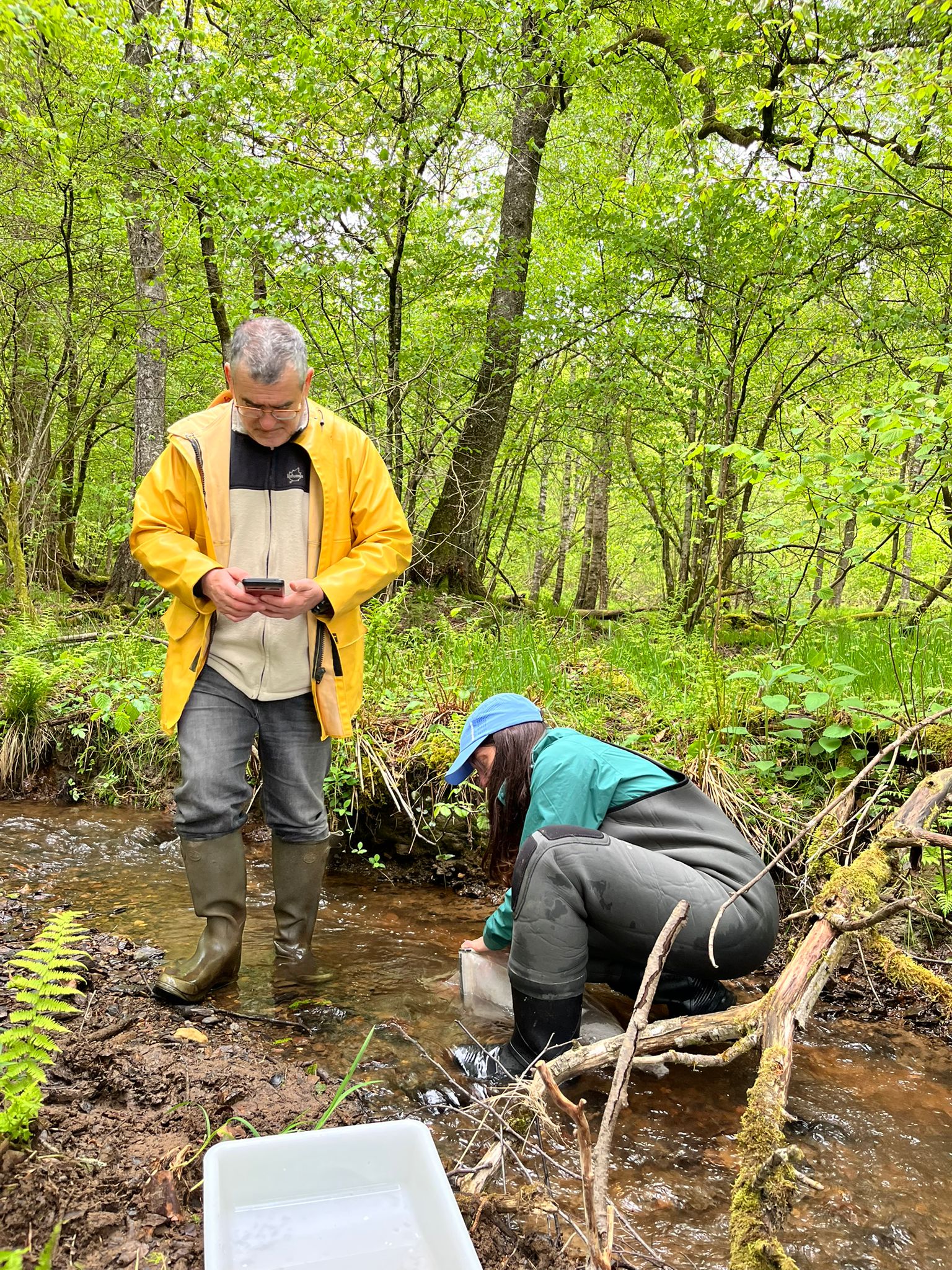
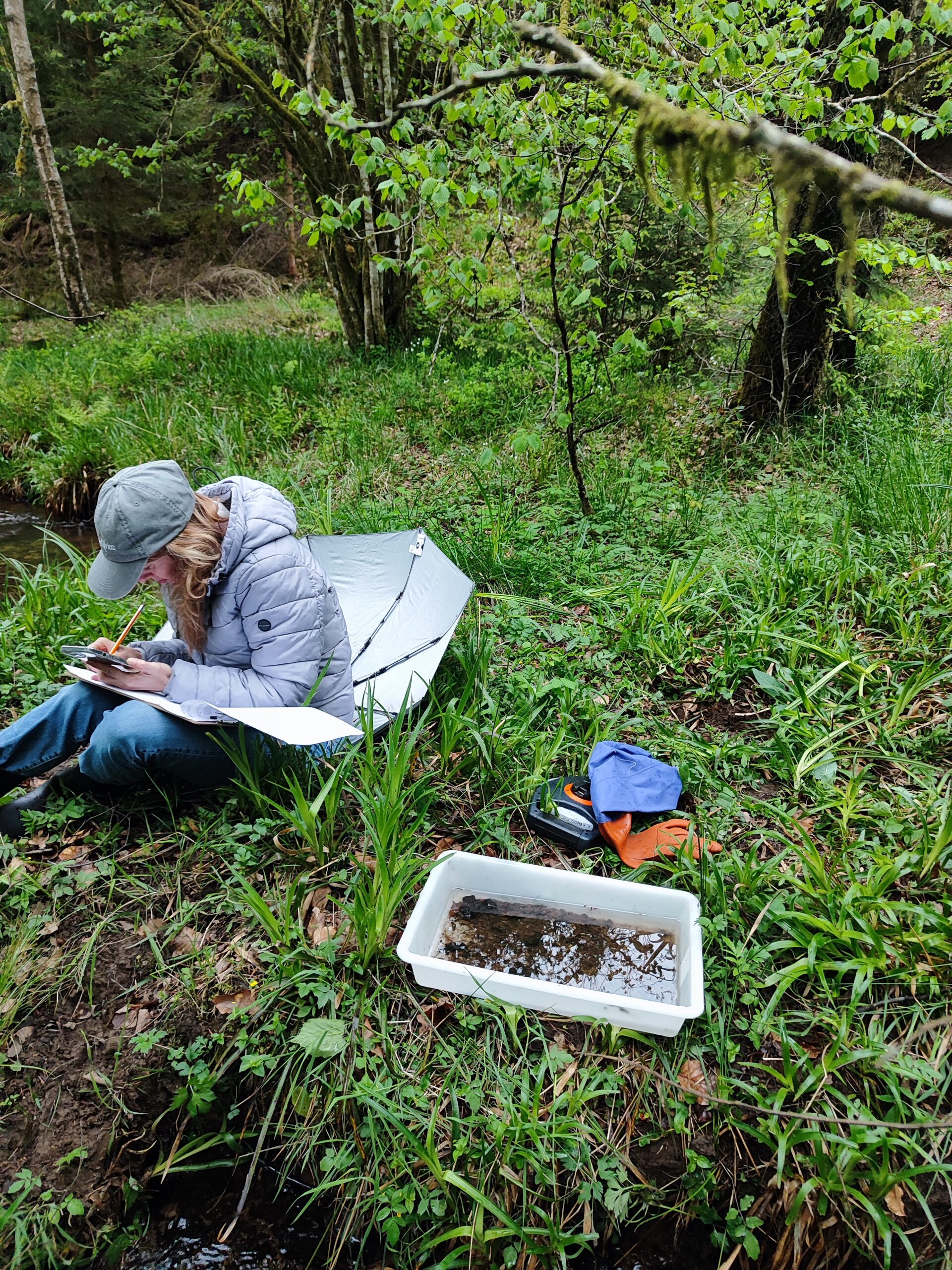
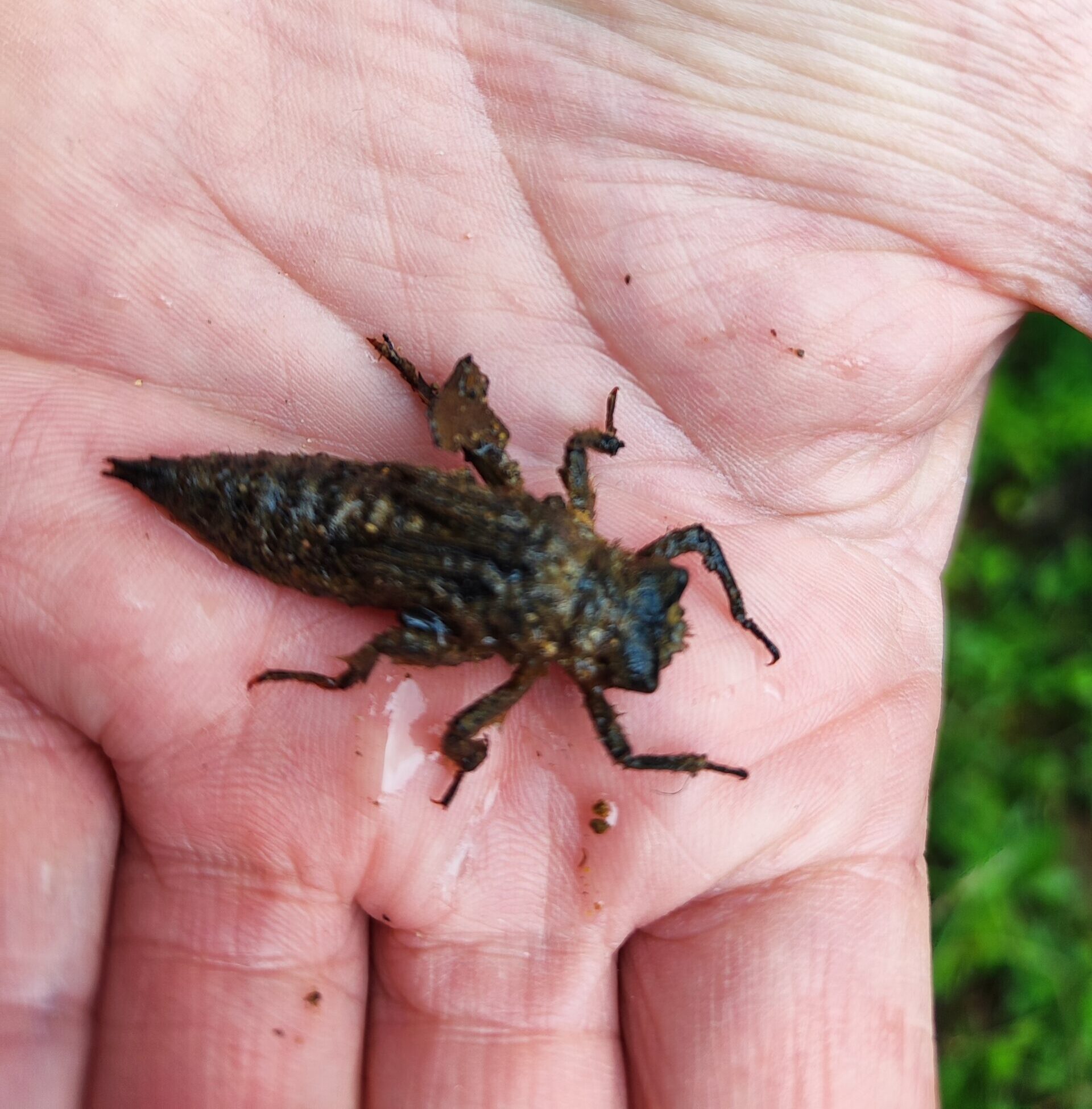
BRF assessed post-restoration conditions to evaluate early ecological responses to culvert removal and river reconnection. Observed indicators included:
- Good-quality macroinvertebrate communities
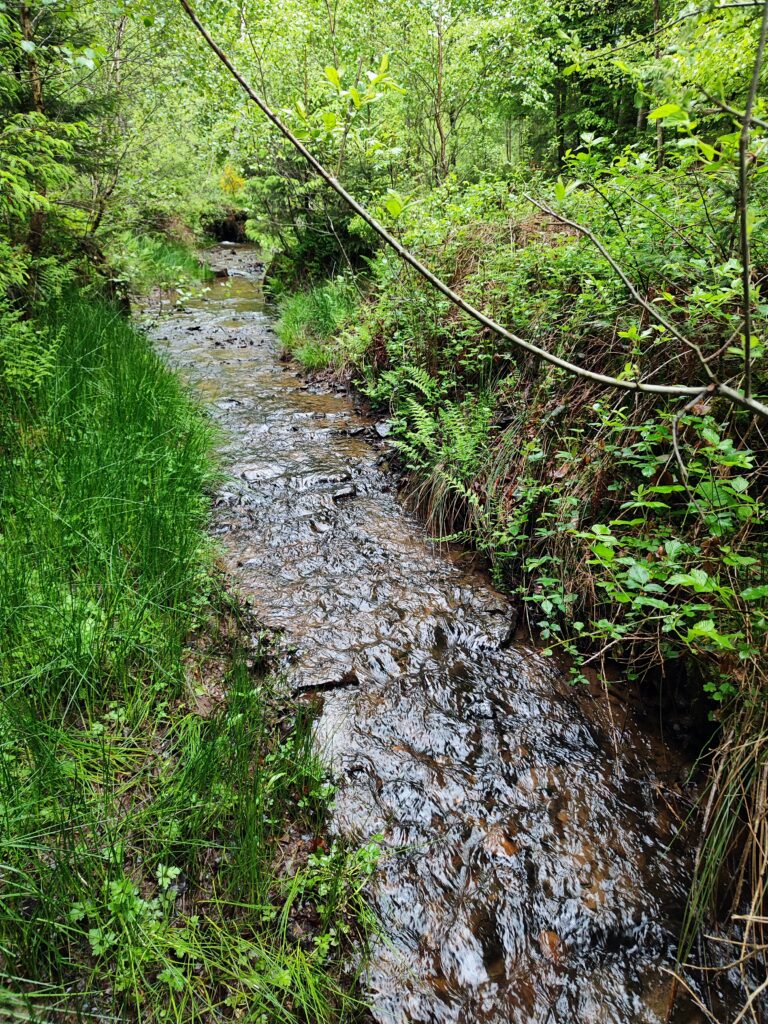
- Improved hydromorphological continuity and flow conditions
- Low levels of organic disturbance (including limited foam formation)
- Well-established and diverse riparian vegetation
Social context and local perceptions
During the field visit, the BRF team met with the director of the natural park and local stakeholders. There is strong local support for the project, with stakeholders expressing pride in the outcomes and interest in continuing and expanding similar restoration actions.
The restored river network also runs through a well-used recreational and touristic landscape, making the improvements relevant not only for biodiversity but also for nature-based tourism and local recreational value. Improved river continuity and landscape quality are perceived as contributing positively to visitor experience in the area.
The project was initiated by the Parc naturel Haute-Sûre Forêt d’Anlier in cooperation with the Walloon Department of Nature and Forests and implemented in two phases:
- Phase 1 (2024): removal of 11 culverts
- Phase 2 (2026): removal/replacement of 3 additional structures
Funding combined regional support from Wallonia and a grant from the Open Rivers Programme, marking the first ORP-supported barrier removal project in Belgium. Additional works were co-financed through the Walloon Recovery Plan (NextGenerationEU).
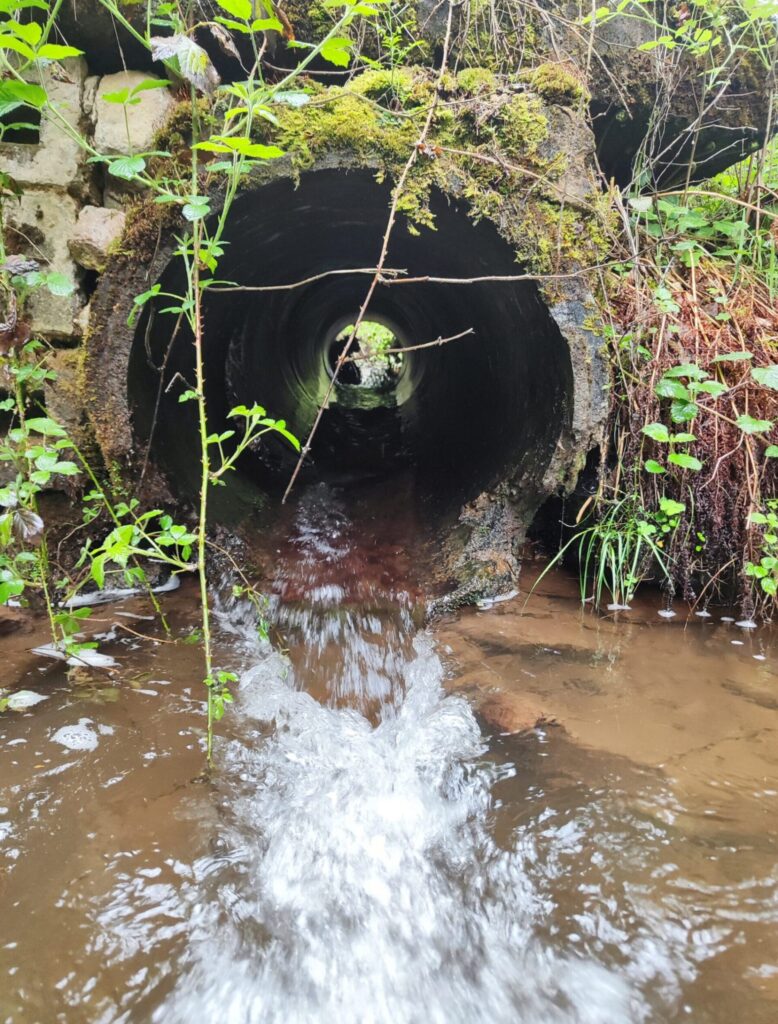
Culvert to be removed this year
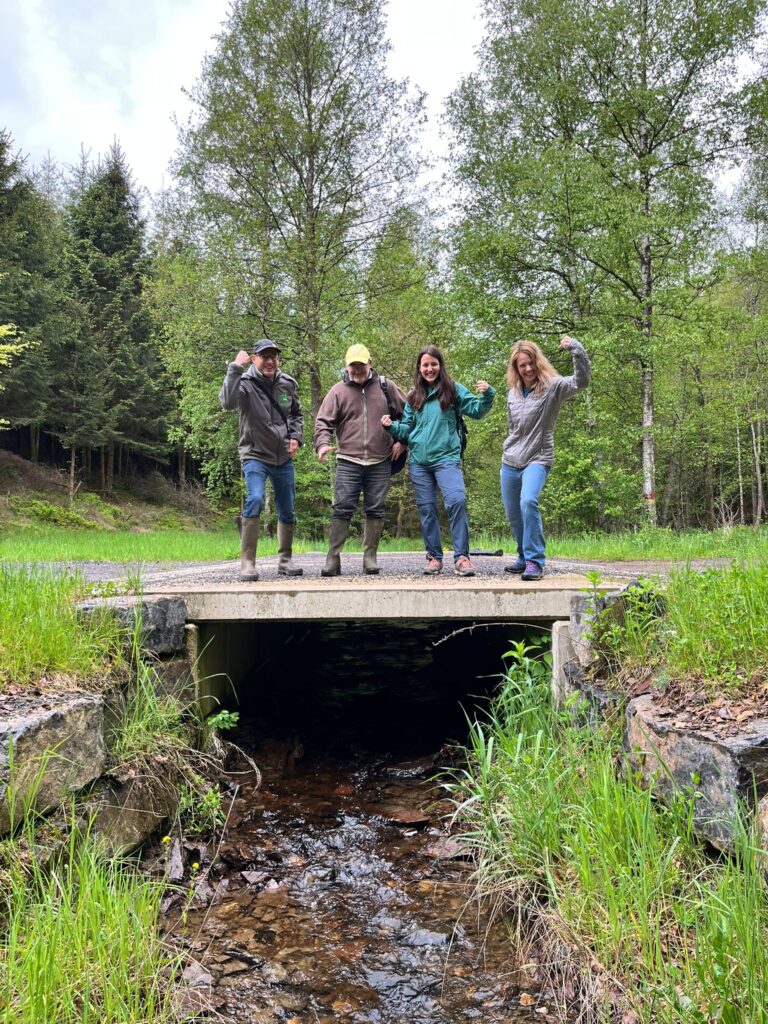
The Forêt d’Anlier project illustrates how removing small but numerous barriers can rapidly restore river connectivity in forested catchments. BRF is documenting early ecological responses alongside strong local acceptance, showing how ecological restoration and social benefits can reinforce each other in shared forest landscapes.